I spent about three months trying to make meal prep work before I figured out what the actual problem was. The food itself was fine. The recipes were simple, the containers stacked neatly in the fridge, Sunday evening cooking sessions were going reasonably well. The issue was what happened between the fridge and wherever I actually ate the food.
I was using a regular tote bag with a thin foil insert — the kind that comes free with certain grocery delivery services or costs a few dollars at the checkout aisle. It looked like it should work. In practice, by the time I got to lunch at noon, the chicken and rice I’d pulled from the fridge at seven in the morning had been sitting at gradually warming temperatures for five hours. The food wasn’t dangerous. It just wasn’t good. Soggy vegetables, protein that had started to release moisture as it warmed, rice that had gone from fluffy to gummy. I reheated it and ate it, but it didn’t taste like the meal I’d spent Sunday evening making.
The foil-lined bag had done almost nothing. I checked: it was warm on the inside an hour after I put cold food in it. The foil reflected some radiant heat but the thin walls conducted ambient temperature straight through. As insulation, it was approximately decorative.
Why the Gap Between Fridge and Lunch Matters More Than It Seems
The standard advice on meal prep focuses on Sunday — what to cook, how to portion, which containers to use, how long things keep in the fridge. Almost no one talks about Monday through Friday, specifically the four to six hours between pulling the meal from the fridge and actually eating it.
That gap matters because cooked proteins — chicken, fish, eggs, ground meat — begin to change texture and lose quality when they cycle through temperature changes repeatedly. A piece of chicken that goes from 4°C in the fridge to 20°C in a bag to reheating in a microwave has experienced a temperature swing that shows up in how it tastes and feels. It’s still safe to eat. It’s just noticeably worse than the same chicken kept closer to refrigerator temperature until you were ready to heat it.
Salads and cold meals have a harder version of this problem. A grain bowl or a mason jar salad that’s meant to be eaten cold has no reheating step to rescue it. If it’s been warming for four hours, what you get is a room-temperature version of something that was supposed to be cold and crisp. The lettuce has softened. The dressing has started to break down. The cucumbers have warmed through. The meal is technically fine and completely unappetizing.
What Switching to a Real Insulated Bag Changed
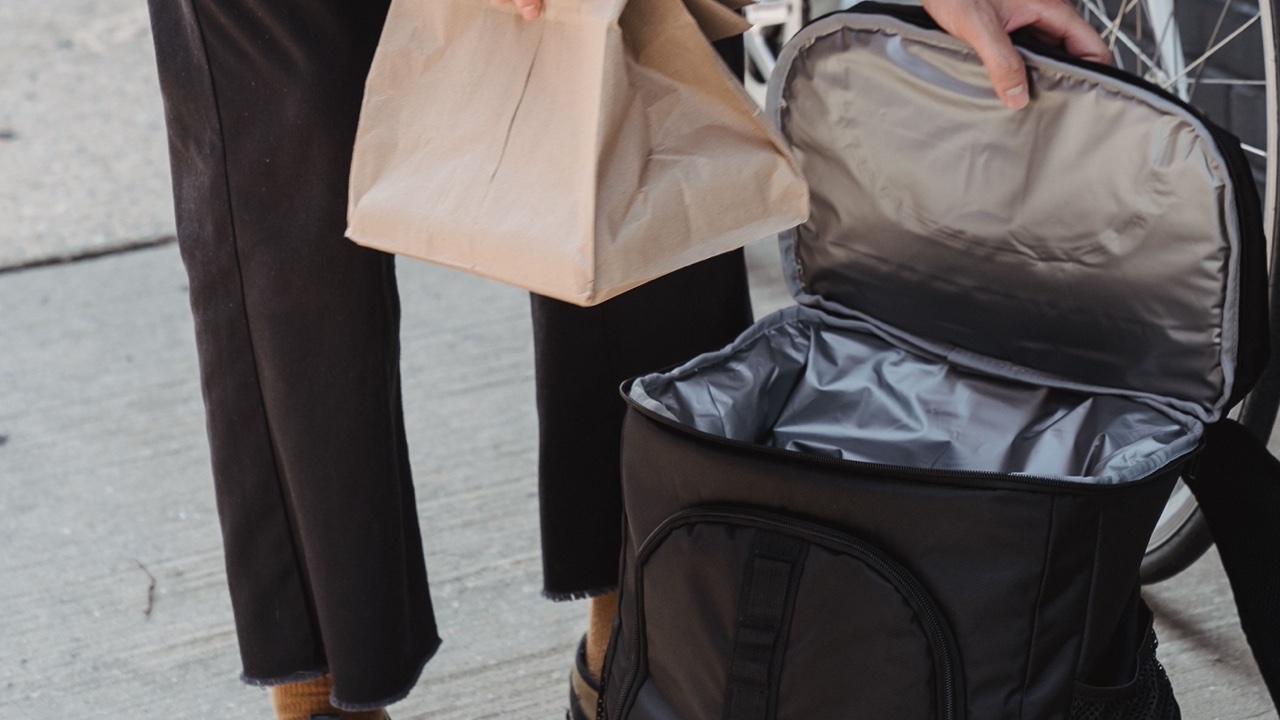
The difference between a thin foil-lined tote and a properly insulated bag is the difference between a novelty and an actual piece of equipment. A bag with a thick closed-cell foam liner — dense enough that the walls feel firm when you press them — maintains temperature in a way the foil version doesn’t come close to.
With a quality insulated bag and a small cold pack, my food arrived at lunch still at or near refrigerator temperature. The chicken was cold the way it was cold in the fridge, not the ambiguous tepid that comes from five hours of slow warming. The salads were still crisp. The containers didn’t have condensation pooled inside from temperature cycling.
This sounds minor. In practice it changed how much I actually followed through on the meal prep habit. The previous system had a hidden friction point: the food was fine on Sunday but less appealing by the time it arrived at lunch. That gap in quality made it easier to talk myself into buying something instead. Once the food tasted the same at noon as it had when I packed it, that friction disappeared. The habit became easier to maintain because the reward — good food at lunch — was actually showing up.
The Specs That Make the Difference
Not every bag sold as “insulated” performs like actual insulation. The range is wide enough that two products using the same word on the label can perform completely differently in real use.
The meaningful variable is liner thickness and density. A foam liner you can easily compress between two fingers is too thin to maintain temperature for more than thirty to forty minutes. A liner that requires real pressure to compress, that makes the walls of the bag feel solid, will hold temperature for two to three hours or more under typical conditions. This is what you’re paying for in a better bag — not the exterior material or the closure style, but the foam quality inside.
Closure design is the second variable. A bag that closes loosely at the top — a simple fold or a magnetic snap — loses cold air every time you set it down or it tips over. A proper zipper, sealed all the way around, keeps the internal environment stable through the jostling of a commute, a bag dropped on a desk, a bag picked up and set down multiple times. The seal matters as much as the liner because even excellent insulation doesn’t help if the cold is escaping through the top.
Size is the third consideration, and it’s more relevant than it sounds. A bag that’s the right size for the containers you’re actually using — not too large, not cramped — maintains temperature better than one where there’s significant empty space for warm air to pool. If you’re carrying two standard meal-prep containers, a bag sized for exactly that performs better than a large tote with two containers rattling around inside it.
Who Actually Needs to Know This
For retailers, lunch accessory brands, fitness brands, or corporate wellness program buyers sourcing insulated bags at volume, the meal prep use case is one of the most consistent demand drivers in the category. The customer is typically someone who has already committed to cooking their own food and is looking for the equipment that makes the habit work reliably — not a casual user who might bring cold food once in a while, but someone who’s going to use the bag five days a week for months.
That customer notices the difference between adequate and excellent insulation faster than almost any other buyer, because they’re using the product in identical conditions repeatedly and can directly compare how the food arrives. A bag from reliable thermal bag manufacturers that specifies foam density and ice retention testing methodology gives buyers what they need to source for this customer rather than hoping a generic “insulated” claim holds up in daily use.
The Habit That Actually Sticks
Meal prep as a habit works when the execution is easy enough that the friction of doing it is lower than the friction of not doing it. The cooking part is usually where people focus — finding recipes, buying ingredients, making Sunday evening productive. The carrying part is treated as an afterthought.
It shouldn’t be. The gap between fridge and lunch is where a lot of meal prep habits quietly fail, not because the food was bad but because it arrived in a condition that was just disappointing enough to erode the motivation to do it again next week.
Fix the bag. The rest of it gets easier.